
The world of search is changing fast, and Artificial Intelligence (AI) is now the gatekeeper to visibility. For wineries and wine associations—whose success hinges on the Direct-to-Consumer (D2C) tasting room experience—this means your traditional SEO playbook must evolve to also include AI Overviews that prioritizing local relevance, trust, and comprehensive answers about experiences. To ensure your winery is cited, summarized, and recommended by AI, your digital strategy must be hyper-focused on drawing people from their screens to your counter. Here is your blueprint for ranking higher and driving foot traffic in the AI era.
AI Search Visibility: Measuring the New Metric
Traditional SEO focuses on page rank, but AI search focuses on answer coverage—are you being cited in the summary answer? Where does AI pull content from? For example, when I search “what type of local wineries are near Augusta, MO” this is what shows:
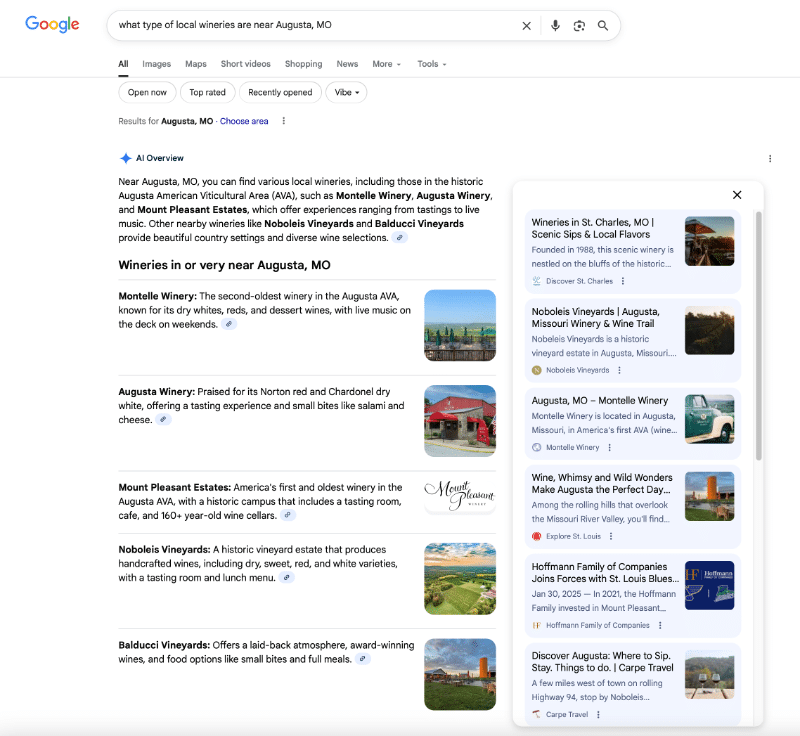 The results are on the left and on the right are the sources. Some are winery websites and others are travel sites. Let’s take a look at how you can show in your local wine tasting room AI results.
- Focus on Prompts, Not Just Keywords: Stop optimizing for single keywords like “wine club” or “winery near me.” Instead, optimize for full, high-intent conversational queries (prompts) that define your market, like, “What are the best wineries with food in Missouri?” or “Where can I find pet-friendly wineries with a great view near me?” AI rewards depth and expertise in answering these complex questions.
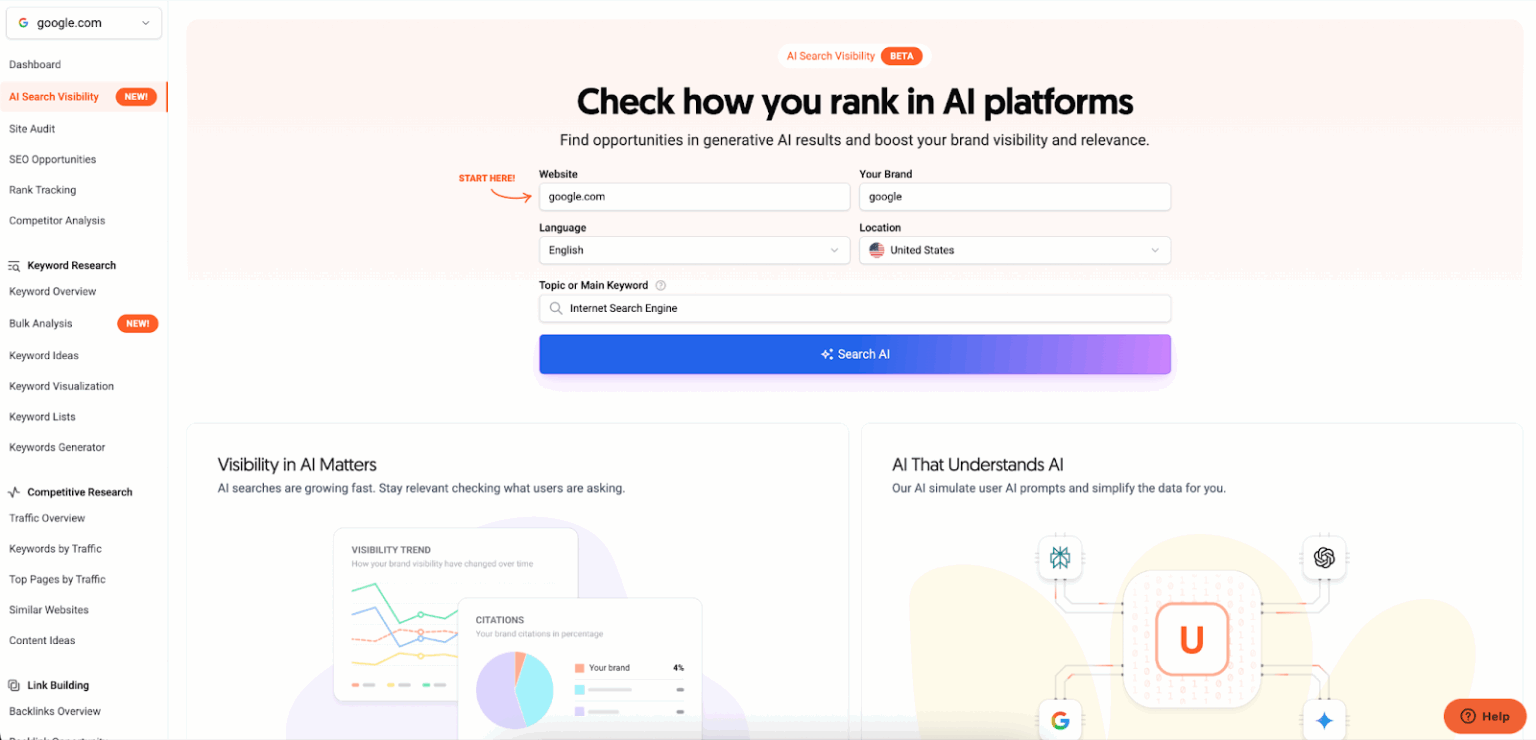
- Identify Gaps: Use an AI visibility tool to find where your Brand Visibility is at 0% but a direct competitor is listed. This identifies the conversations you are currently losing and where you have the most immediate opportunity to create superior content. At Bauerhaus we use Ubersuggest for all of our client websites. They report SEO plus have new “AI Visibility” Tools.
Technical Steps: Lock Down Your Local Visibility
AI systems frequently pull local business information directly from structured, verified sources. This makes Local SEO your single most important technical task.
 1. Master Your Google Business Profile (GBP) & Local SEO:
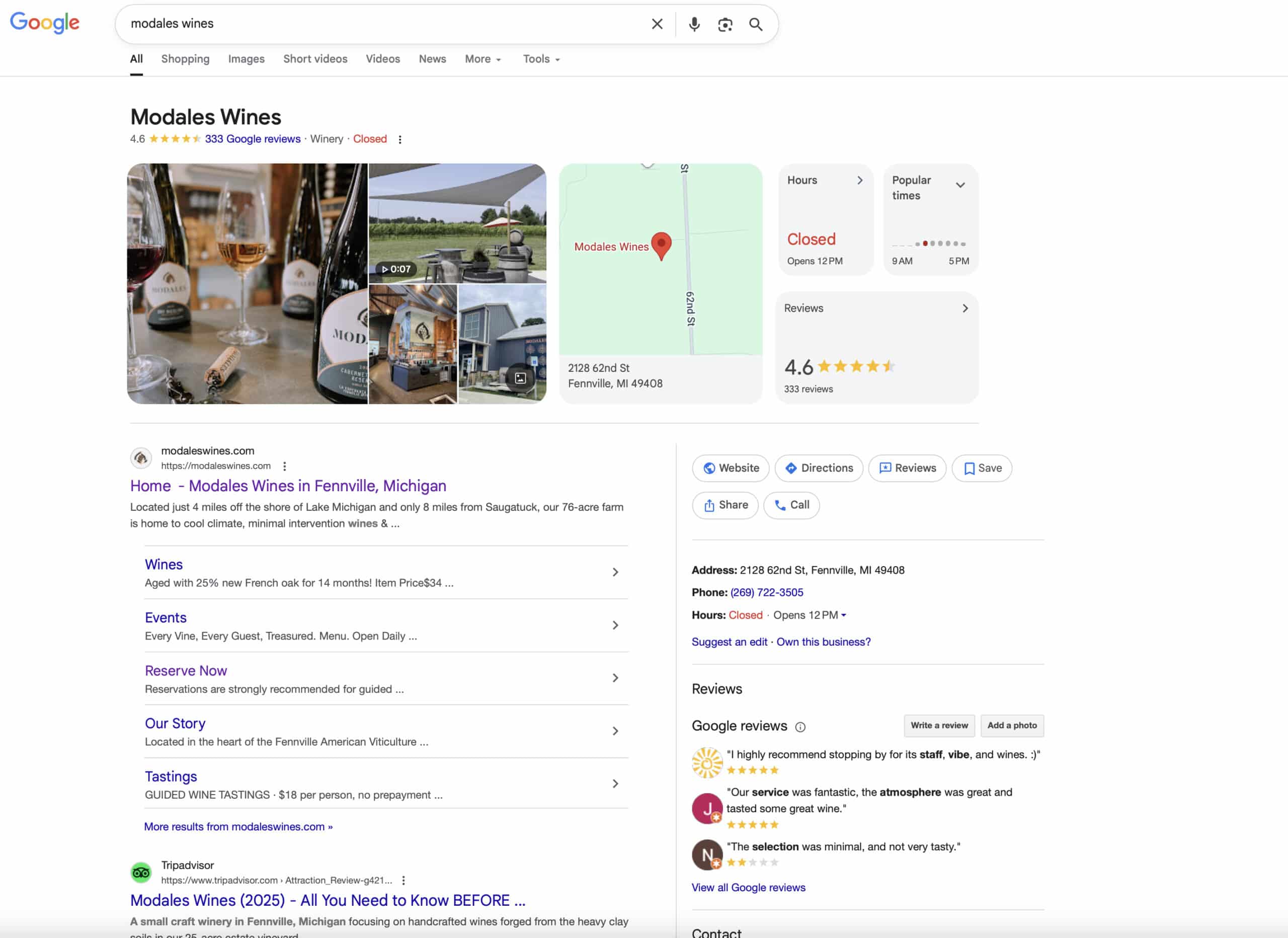
- Claim and Optimize: Claim and fully optimize your Google Business Profile (GBP) listing. This is the most crucial step for local AI ranking. Keep hours, address, phone number, and services (Tastings, Tours, Events) meticulously up-to-date.
- Hyper-Local Keywords: Optimize your website and GBP posts for keywords that include your region: “wine tasting in [County/City],” “pet-friendly wineries near [Interstate],” or “best Chambourcin in Illinois.” I like to tell clients: Pick 3-5 ways your winery is different from competitors and focus on that in your Google listing, Google posts, website and social media.
- Collect Reviews: Consistently encourage and respond to reviews on Google, Yelp, and TripAdvisor. AI uses these social signals to determine your trustworthiness and quality of experience. Ask your customers to review your winery at checkout, with QR codes or send an email automation.
2. Implement Event and Local Structured Data (Schema Markup):
- Use LocalBusiness Schema: Use this to clearly mark your physical location, opening hours, and service area.
- Event Schema is Critical: When you post about a live music night or a harvest party, use Event schema. This code tells AI exactly when and where a visitor can have an experience with you, making it easy for AI trip planners to include your winery in an itinerary.
3. Enable AI Crawlers and Prioritize Speed:
- Check robots.txt: Ensure essential files like robots.txt and meta-robots tags do not block known AI crawlers (GPTBot, Claude-Web).
- Focus on Speed: A fast loading time is a prerequisite for good ranking and a positive user experience.
Content Strategy: Sell the Experience, Cite the Facts
The focus of your content should shift from merely selling wine to selling the experience of visiting your tasting room, backed by factual wine data.
1. Embrace Conversational Search for Trip Planning:
- Answer Experience-Based Questions Directly: Study how people phrase questions for generative AI when planning a weekend trip (e.g., “What are family-friendly wineries with live music near St. Louis?” or “Which Midwest wineries offer tours about sustainable vineyard practices?”).
- Use Q&A Formatting: Frame your headings as direct questions (H2 or H3 tags) and answer them concisely on relevant landing pages (e.g., H2: “Do you need a reservation for a wine tasting? Answer: No, walk-ins are welcome Tuesday through Saturday, but we recommend booking a time slot for groups of 8 or more.”). FAQ pages are easy to add and can help AI pull quick answers to customers’ questions.
2. Build E-E-A-T (Experience, Expertise, Authority, & Trustworthiness) into your website. I like to say your website should be the center of all of your marketing. All of your marketing should point to your website. You own your domain and website, where social media sites and travel sites are platforms that other companies own. Telling your story on your website blog ensures that when customers are considering your winery to visit, they see the full experience.
- Experience (New E): Showcase actual, firsthand winery experience.
-
- Action: Use video tours, winemaker Q&As, and customer stories.
- Expertise: Prove your knowledge of Midwest winemaking.
- Action: Include author bios of staff with experience in your grapes and winemaking process. AI favors data-backed content that is easily quotable. For example:
- BAD: “A delightful white wine with sweet notes.”
- GOOD: “Our Edelweiss features 3.5% residual sugar, a vibrant 12.5% ABV, and is cold-fermented in stainless steel to preserve its classic pineapple and citrus aromatics.”
- Action: Include author bios of staff with experience in your grapes and winemaking process. AI favors data-backed content that is easily quotable. For example:
- Authority: Get external validation.
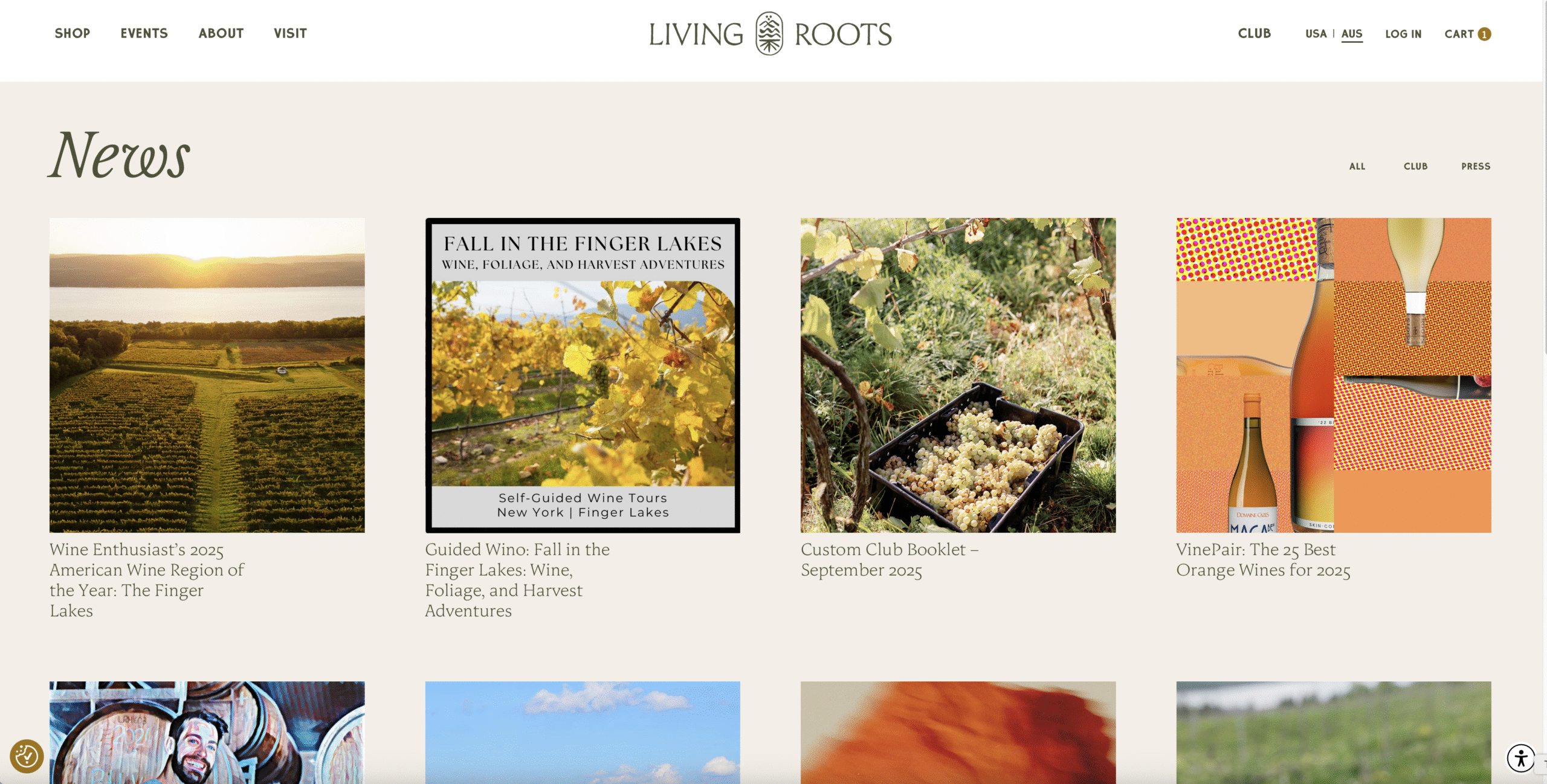
- Action: Create a news page on your website with links from anywhere you are featured: local news, tourism boards, awards, and regional wine associations.
- Trustworthiness: Be transparent and accurate.
- Action: Maintain clear pricing, contact info, and a professional, secure website (HTTPS).
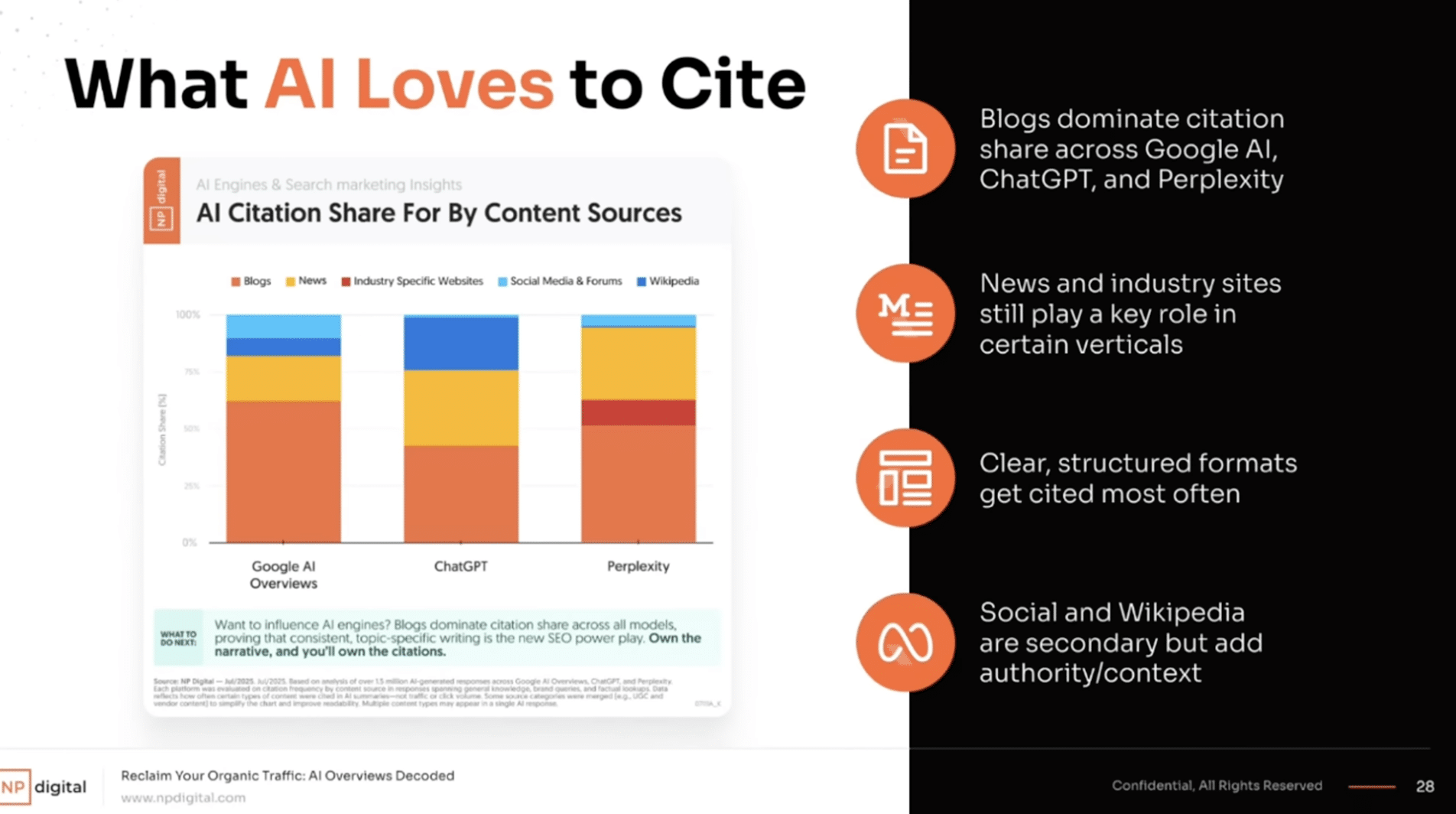
3. Prioritize Educational Content around your Brand: I recently watched the NP Digital webinar on AI Overviews Decoded and they shared AI is pulling the most content from blogs and news stories. If you haven’t started a blog, once a month is a great place to start. If you have one, post weekly for the most benefits. Below are topics to get you started:
- Winery Tour Guides: Create clear, step-by-step guides for tours and tastings (easily pulled for HowTo schema).
- Local Guides: Write blog posts about the local area that position your winery as the central attraction: “The Ultimate Guide to a Weekend in [Your Town], Starting with Our Tasting Room.”
- Event & Menu Pages: Use tables, bullet points, and numbered lists to clearly outline tasting flights, food menus, and event schedules. People skim and LLMs prioritize this clean, easy-to-extract data.
Additional Boosters: Closing the Loop on AI Visibility
Digital PR and Community Authority:
- Create a News Page: Backlinks from high-authority sources—especially local news outlets, tourism boards, and regional wine associations—are powerful credibility signals to AI. These links prove your winery is a relevant local entity.
- Manage Online Reputation Proactively: AI reads everything—reviews, articles, forum posts. Monitoring your online mentions allows you to proactively influence the sentiment AI reports about your brand.
Image and Video Optimization:
- Visual Content: Use high-quality photos of inside and outside your tasting room, vineyard views, and happy customers.
- Alt Text and Descriptions: Use descriptive alt text for all images that include local details, e.g., “A flight of our signature Chambourcin served on the tasting room patio overlooking the [River Name] Valley.”
By implementing this AI-focused, experience-driven blueprint, your winery will not only be discoverable online but will become the trusted, go-to recommendation for potential visitors planning their next tasting room stop.
Want a Free Website Review Analysis for your Winery?
Where does your winery rank with AI? I provide website reviews that include: design, SEO and AI. Set up a FREE Discovery Call with me, Rebecca Ritz, Owner and Creative Director, to learn more.